Financial Times Warns of Consequences if Iran Closes Strait of Hormuz
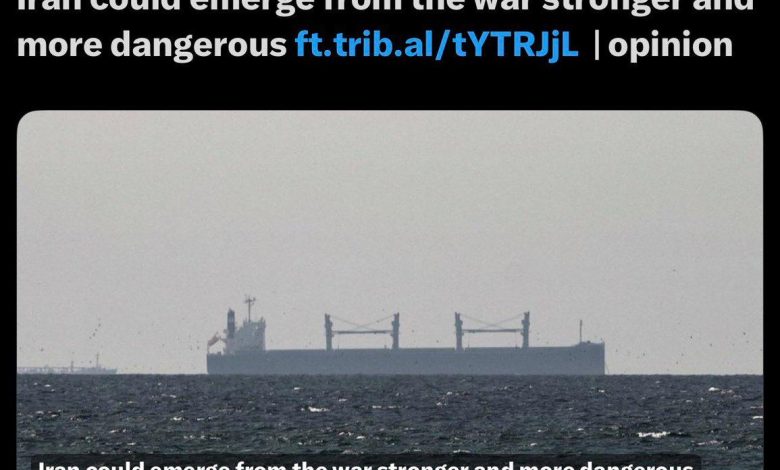
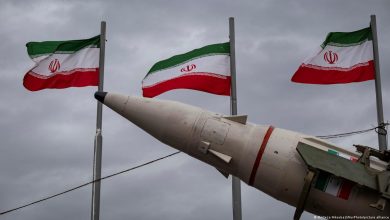
The Financial Times has reported that following recent tensions, Iran may not only avoid weakening but could emerge stronger with new leverage and pressure tools. According to the newspaper, Tehran’s goal is to establish a kind of “toll booth” in the Strait of Hormuz, and there is a possibility it might succeed in this endeavor.
The report states that Iran has enacted its long-standing threat to close the Strait of Hormuz, effectively blocking this strategic passage. The Financial Times writes that Tehran has realized how it can exert significant economic pressure on Western countries over a short period; from the newspaper’s perspective, this could strengthen Iran’s international position.
The newspaper also points to the policies of Donald Trump, President of the United States, claiming that Washington’s confrontational approaches have sometimes enabled U.S. rivals to acquire new pressure tools. An example cited is the trade war with China, which provided Beijing with opportunities to exploit its rare earth elements capacity.
The report continues by noting that although Iran has suffered heavy blows, it has continued to resist and has demonstrated its ability to harm U.S. interests in the Persian Gulf region, including Saudi Arabia and the United Arab Emirates. The author believes this could have long-term implications for regional dynamics.
The Financial Times describes the Strait of Hormuz as a potential revenue source for Iran. According to the report, a fee of two million dollars per ship has been demanded for the safe passage of vessels through this route. Under normal conditions, about 140 ships pass through the strait daily, and a rudimentary calculation suggests that if such a scheme were implemented, its monthly revenue could reach billions of dollars.
The Strait of Hormuz is one of the world’s most important energy passageways, connecting the Persian Gulf to open waters. Any developments there have a direct impact on global oil markets and the international economy.