Iran’s Strategic Calculus in Ongoing US-Israel Conflict Enters Fifth Week
As the US and Israel’s war against Iran enters its fifth week, the battlefield has significantly tilted in Iran’s favor.
Iran’s missile and drone capabilities remain intact, the Strait of Hormuz is blocked, and Yemen has commenced its military operations against Israel. Consequently, shipping through the Red Sea and the Bab-el-Mandeb strait is expected to be disrupted due to Yemen’s entry into the conflict.
The disruption of trade through Bab-el-Mandeb and the Red Sea will substantially increase the financial and economic pressure on the global system. Moreover, America’s Arab allies in the region are set to lose their remaining oil export routes.
The resistance movements in Iraq and Lebanon have showcased numerous videos captured by their cost-effective drones—each valued at less than $1,000—depicting strikes on Israeli Merkava tanks and US and Israeli helicopters. This not only highlights the resistance’s successes but also presents key aspects of the war economy.
Meanwhile, the US and Israel initiated attacks on critical infrastructure within Iran, targeting the steel industry and peaceful nuclear facilities.
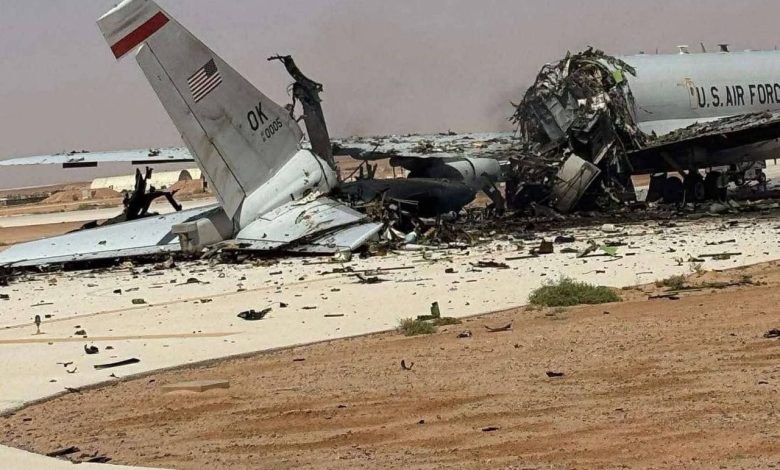
The US assaults raised public expectations that Iran would immediately respond with significant strikes on enemy infrastructure. However, Iran, instead of conducting widespread attacks on infrastructure, first targeted a US base in central Saudi Arabia, resulting in the destruction of at least three refueling aircraft and one AWACS plane. Subsequently, Iran attacked sites hosting US military forces in Kuwait and Dubai, as well as several American troop carriers along the United Arab Emirates’ coasts. According to American sources, dozens of US personnel were injured in these attacks.
One might ask why Iran did not respond to infrastructure strikes with similar attacks.
Martyr Abu Mahdi al-Muhandis once said, ‘Victory on the battlefield requires hot war and cold intellect.’
This means that in a full-scale conflict, one should not fight emotionally but rather with purpose and wisdom. Those who fight emotionally are more vulnerable.
So far, Iran’s management and escalation of the conflict have been entirely guided by cold intellect. All strategies—from the involvement of Iran’s allies in the fights to the timing, quality, and choice of tools and methods—have been calculated and deliberate, devoid of emotional decisions.
The blockade of the Strait of Hormuz, permitting passage only to non-enemy ships, the evacuation announcements in various areas, the selection of targets and weapons, the people’s control of the streets, and all actions contributing to Iran’s resilience have stemmed from rational decisions. Where damage has occurred, signs of emotional miscalculation are evident.
By attacking infrastructure, the enemy has effectively authorized Iran to destroy its own infrastructure. However, these infrastructures are immovable and can be targeted whenever Iran chooses, whereas US forces and equipment are mobile. The US is preparing for potential ground involvement. Damaging US forces at their source before they can mobilize is among the best strategies, explaining why Iran’s recent attacks were the most logical course of action.
Undoubtedly, Iran’s military strikes will severely damage infrastructure linked to US and Israeli interests. Yet, prioritizing targets amidst heated conflict epitomizes cold intellect.
Seyed Ahmad Mousavi, Religious Scholar