Two Agreements Signed to Train Families of Martyrs and Disabled in Three Provinces
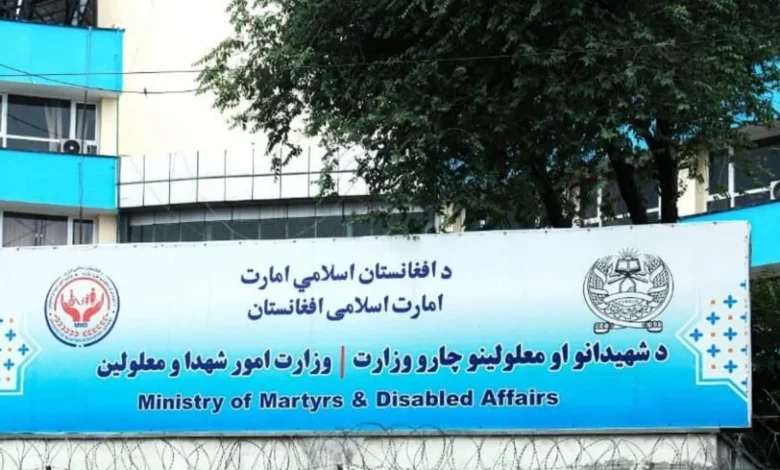
The Ministry of Martyrs and Disabled Affairs has announced the signing of two separate agreements with partner organizations to empower families of martyrs and people with disabilities. Under these agreements, more than three thousand individuals in the provinces of Kunar, Baghlan, and Laghman will receive vocational training, after which they will be provided with the necessary equipment to start their own businesses.
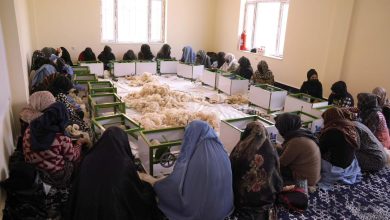
According to the ministry’s press office, the first agreement was signed with the “Supporting and Meeting the Needs of Afghan Children and Needy Women Institute.” Under this agreement, 2,595 members of martyr and disabled families in Kunar and Baghlan provinces will be trained in various fields including tailoring and embroidery, dairy and food production, vegetable cultivation, mobile phone repair, carpet weaving, and other professions. The cost of implementing this program is reported to be 904,092 US dollars.
The information provided states that after ten months of training, participants will receive the tools and equipment needed to start small businesses, enabling them to earn an income through the skills acquired.
In the second agreement signed with the “Community Empowerment Institute,” 1,050 members of martyr and disabled families in Laghman province will be trained in fields such as tailoring and embroidery, dairy production, vegetable cultivation, mobile and electrical appliance repair. Upon completing the ten-month course, work equipment will also be provided to this group.
These agreements were signed by Mawlawi Sanaullah Farqani, Head of Foreign Relations, Planning, and Legislative Affairs at the Ministry of Martyrs and Disabled Affairs under the Taliban administration, alongside the directors of the mentioned institutes. While the Taliban administration emphasizes efforts to achieve economic self-sufficiency for vulnerable families, experts consistently stress the importance of transparency in budget expenditures and close monitoring of project implementation to ensure aid effectively reaches those in need.