Khaf-Herat Railway’s Fourth Section First Phase 98% Complete, Efforts Ongoing
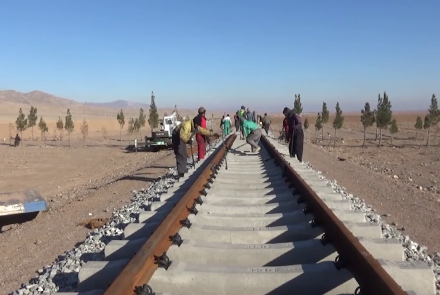
Afghanistan’s Ministry of Public Works has announced that the construction of the first phase of the fourth section of the Khaf-Herat railway line is over 98% complete, with ongoing efforts to fully finish the project. This railway is considered one of the country’s most important infrastructure projects, connecting Afghanistan to Iran’s railway network through Herat province.
According to ministry officials, the Khaf-Herat railway project is designed in four sections, three of which have already been completed. The fourth section comprises two phases, both currently under construction. Mohammad Ashraf Haqshenas, spokesperson for the Ministry of Public Works, stated that upon completion of the remaining work, it will provide greater convenience for traders.
The railway route starts from the city of Khaf in Iran and extends to the city of Herat in western Afghanistan. Due to its geographic location, Herat is considered one of the country’s most significant transit points, and connecting it to regional railway networks could strengthen Afghanistan’s position in regional trade.
Economic experts say that using the railway, compared to road transport, reduces the cost and time of moving commercial goods. Seyed Masoud, an economic analyst, stated that this route can connect Afghanistan through Iran to Turkey and also to open waters, including the Persian Gulf and the Chabahar port. Additionally, by linking to the Turkmenistan railway, it provides the groundwork for wider regional integration.
Meanwhile, despite recent tensions in Iran and concerns about possible import disruptions, Taliban officials have said that the transfer of commercial goods via the Khaf-Herat route continues normally. According to the spokesperson of this administration, on one day alone 94 wagons of goods arrived at the Roshanak station in Herat, with hundreds more on their way to Afghanistan.
However, effective utilization of such projects requires transparent management, sustainable planning, and constructive engagement with neighboring countries—factors considered vital for the country’s economy under current conditions.