Resistance Council Warns Taliban’s Approach Turns Afghanistan into Regional Conflict Zone
The Supreme National Resistance Council for the Salvation of Afghanistan has condemned the recent Pakistani airstrikes in eastern Afghanistan, stating that the current situation is a direct result of the Taliban’s “extremist approach.” The council warned that continuing this path could increasingly transform Afghanistan into a recurring battleground for regional conflicts, with defenseless civilians bearing the primary cost.
In its statement, the council emphasized that the crisis is not confined to a single neighboring country and that, if current policies persist, similar incidents may occur with other nations as well. The council highlighted that attacks on what it called “civilian individuals” constitute a clear violation of humanitarian principles and internationally accepted norms.
This anti-Taliban body asserted that breaking free from the “cycle of violence and insecurity” requires fundamental changes in the power structure. It added that the current dominance neither reflects the will of the people nor has the capability to ensure security or responsibly manage regional relations. The statement underscored that achieving peace and protecting citizens’ lives necessitate the establishment of a legitimate and accountable government.
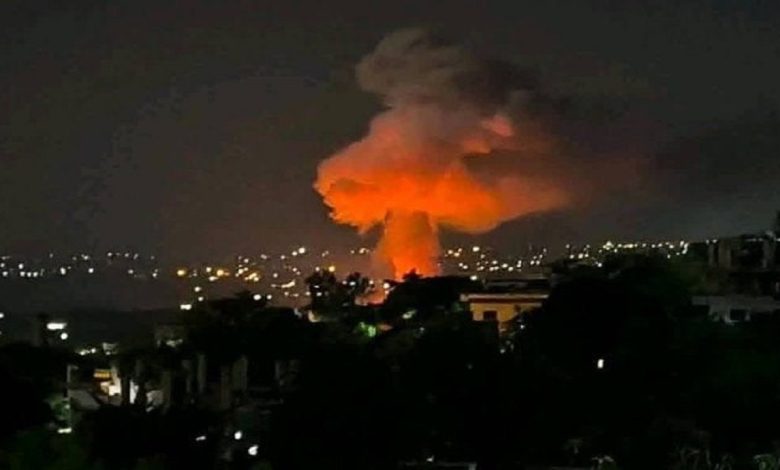
This position emerged after Pakistani fighter jets targeted parts of Khogyani, Ghani Khel, and Behsud districts in Nangarhar province, as well as Barmal district in Paktika province, around midnight on Saturday, 2nd of Hoot (Persian calendar).
The Taliban’s Ministry of Defense responded by stating it would retaliate “at an appropriate time,” describing the attacks on civilian targets and religious centers as indicative of “intelligence and security failures” by the Pakistani military.
Conversely, Pakistani officials claimed the strikes targeted hideouts of Tehreek-e-Taliban Pakistan (TTP) and Islamic State Khorasan Province (ISKP), killing nearly 70 militants affiliated with these groups. The Taliban government, however, labeled the attacks as “an invasion” and alleged that more than 20 civilians, including women and children, were killed in Behsud district, Nangarhar.
Earlier, Pakistan’s Ministry of Information and Broadcasting stated that these airstrikes were carried out in response to suicide bombings and car bomb attacks at Shia mosques in Islamabad, Bajaur, and Bannu during Ramadan, attacks claimed by both TTP and ISKP.
Analysts suggest that the ongoing tensions reflect how the absence of an inclusive and accountable political structure in Afghanistan has increased regional pressures and severely endangered civilian security.