UNICEF: Standardized Classrooms Improve Quality of Education in Afghanistan
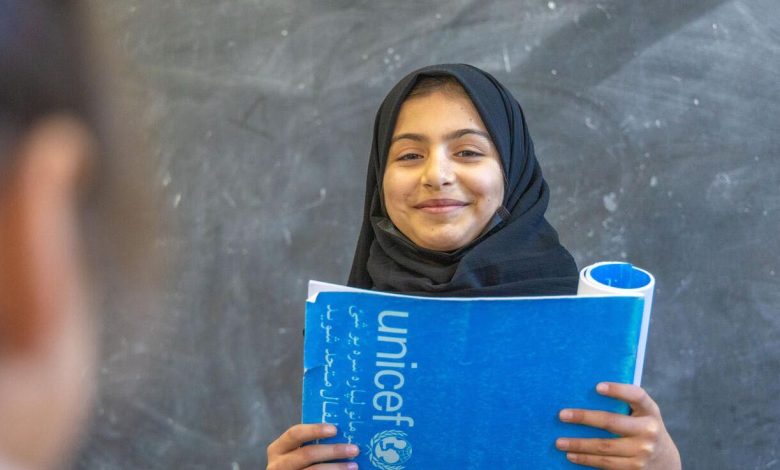
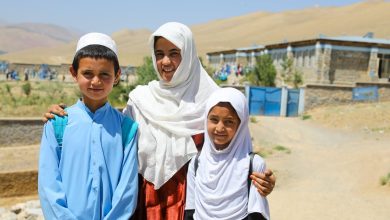
Tajuddin Oiwali, the UNICEF Representative in Afghanistan, has stated that the creation of standardized classrooms has enabled children to learn in a safer and more suitable environment, leading to improvements in their learning outcomes. According to him, the provision of standard classroom spaces has had a direct impact on enhancing the quality of education.
Oiwali wrote on X on Thursday, February 19, that previously many students attended classes in tents that became extremely hot in the summer and very cold in the winter. He added that in some cases, up to 80 students were packed into a single classroom, a situation that seriously hindered the educational process.
The UNICEF representative explained that with the construction of new classrooms by the organization and its partners’ support, students can now study in better and more comfortable conditions. He emphasized that “when conditions improve, children learn better.”
Earlier, UNICEF had warned that Afghanistan’s education system is in a critical state, with over 90 percent of 10-year-old children unable to read a simple text. This statistic highlights the deep challenges faced by the country’s education sector.
Since the Taliban’s return to power, Afghanistan’s education system has encountered widespread problems. Many schools in provinces and districts suffer from a lack of standard buildings, teaching equipment, and basic facilities. Additionally, imposed restrictions on girls’ education have limited access to education for a large portion of society.
Education experts believe that the continuation of these restrictions and the shortage of professional teachers pose a serious threat to the future of the younger generation. They call on the Taliban administration to be accountable for the right to education, especially for girls, and to ensure equal access to education for all.