UN Development Framework 2026 Coordination Meeting Held in Kabul
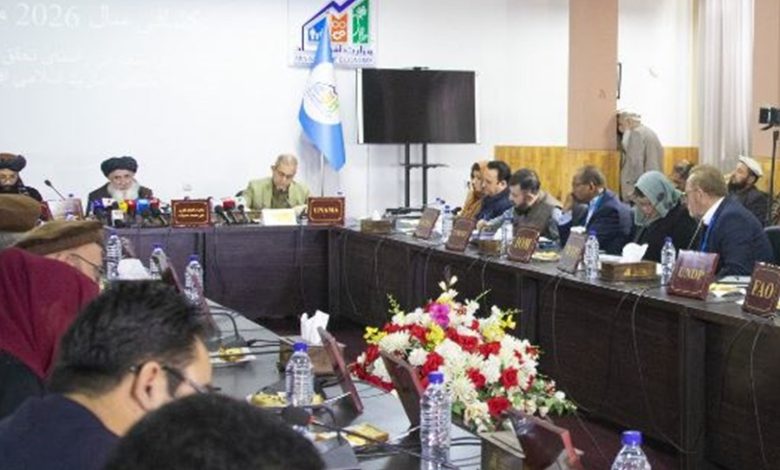
The Taliban’s Ministry of Economy announced that the 2026 United Nations Development Framework coordination meeting was held in Kabul with the presence of representatives from international organizations. The meeting was chaired by Din Mohammad Hanif, acting head of the ministry, and attended by representatives from the Ministry of Foreign Affairs, UNAMA, heads of UN offices, and European Union representatives.
According to the released information, the country’s economic situation, development priorities, and existing challenges were discussed at the meeting. The Minister of Economy, while presenting a report on the current conditions, expressed gratitude for the cooperation of international organizations in recent years and emphasized the continuation of interaction.
The Ministry of Economy stated that Afghanistan faced serious economic, social, and climatic challenges in 2025. The forced expulsion of over two million Afghan migrants from neighboring countries, ongoing sanctions, frozen foreign currency reserves, and a sharp decline in humanitarian aid were cited as factors directly impacting the livelihoods of residents, especially vulnerable groups.
Despite these conditions, the Taliban administration claims that through economic policies and the implementation of support projects, it has managed to maintain relative stability. Strengthening financial management, supporting domestic production, backing the private sector, developing exports, and increasing domestic revenues were among the measures said by officials to have improved economic indicators compared to the previous year. However, independent organizations have not published accurate and verifiable data regarding the extent of this growth.
The Ministry of Economy also highlighted the United Nations’ role in responding to the urgent needs of the people. Addressing the impacts of climate change, problems faced by migrants and returnees, ensuring food security, and providing basic health services were mentioned as sectors where humanitarian assistance has been vital.
Based on statistics provided by the ministry, approximately 1.009 billion US dollars in aid from the international community were allocated to various sectors in 2025, of which 590 million dollars were spent on projects. Meanwhile, the UN Office for the Coordination of Humanitarian Affairs (OCHA) reported that only 36 percent of the 2.4 billion dollar need was met, with aid levels declining compared to the previous year.
The Ministry of Economy emphasized that achieving sustainable economic stability requires self-reliance and constructive cooperation with the international community. While the Taliban administration stresses the formulation of a long-term development strategy, experts believe that without creating a predictable political environment, guaranteeing fundamental citizens’ rights, and gaining international trust, achieving sustainable growth will face serious challenges.