Construction of Three Water Supply Networks Begins in Ghazni and Jowzjan Provinces
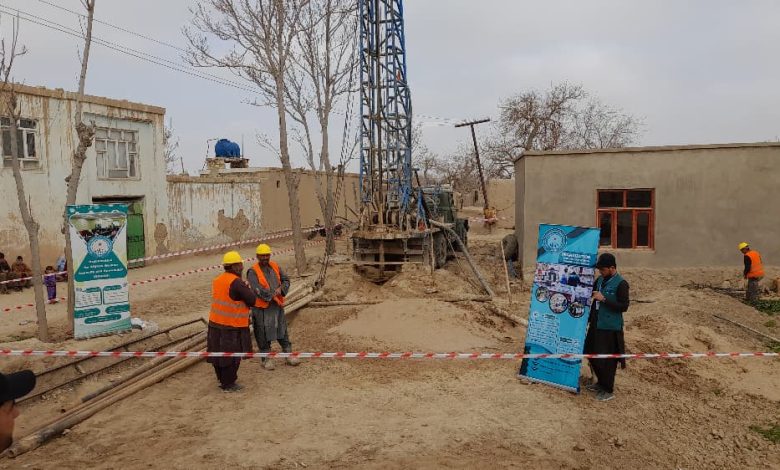
Officials from the Directorate of Rural Rehabilitation and Development in Jowzjan and Ghazni provinces have announced the start of construction on three water supply networks. Upon completion, more than 1,300 families will gain access to safe drinking water.
In Jowzjan, Mawlavi Asadullah Hamza, head of the Directorate of Rural Rehabilitation and Development, stated that two water supply networks worth $157,065 are being implemented in the village of Bishkap-e-Sorkh in Aqcha district and the village of Ghazgi in Sheberghan city. According to him, these projects are funded by the international charity organization AHF and executed by the Waq organization.
Based on the information provided, these networks will be solar-powered and constructed on a house-to-house basis, covering nearly 1,000 families. Additionally, 20 water points will be built for schools and educational institutions in the area as part of this program.
Mawlavi Abdullah Sarhadi, the governor of Jowzjan, said that the Taliban administration is committed to implementing public-benefit projects to meet the basic needs of the people. However, a significant portion of these projects is financed by external organizations, highlighting the dependency of developmental programs on foreign resources.
Meanwhile, in Ghazni province, construction has also begun on a water supply network in the Shilay village of Giro district. Mullah Mohammad Rahim Hashimi, the General Director of Social Affairs at the Directorate of Rural Rehabilitation and Development in Ghazni, said this project is being carried out at a cost of eight million Afghanis.
He explained that the network includes digging a 120-meter-deep well, building a water reservoir with a capacity of 20 cubic meters, laying 12,000 meters of piping, and installing 133 faucets. Once completed, 322 families will have access to clean drinking water, and the project will provide employment opportunities for dozens of local residents during its implementation.
Access to safe drinking water remains a serious need in many rural areas of the country, with residents hoping that water supply programs will be carried out sustainably and with effective supervision.