US-Iran Negotiations Shadowed by Calculated Costs and Benefits
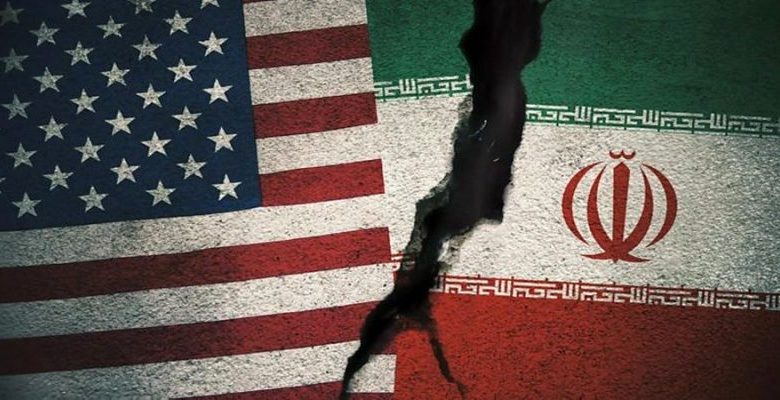
The US approach to negotiations with Iran is dual-faced; it pushes away with one hand and pulls closer with the foot. On one hand, the US needs these talks and desires a successful outcome, while on the other hand, it tries to appear as if it holds the upper hand and that Washington is in control of the initiative.
Within this framework, a planned negotiation between Iran and the US scheduled to take place in Oman was canceled, only for the US to soon after claim with a sense of condescension, in line with the wishes of the Arab countries in the region, that it would participate in the talks. However, the reality is that the Americans themselves are more eager to negotiate with Iran than the Arab countries are, and this desire stems directly from Washington’s strategic calculations.
The US inclination toward resolving issues with Iran results from an assessment of conditions and capabilities. There is no doubt that the US military power, especially in air warfare, is incomparable to Iran’s. If President Trump had conclusively concluded that a military strike could decisively end the Islamic Republic, he likely would not hesitate even for a moment. But the reality is that the cost-benefit calculation of a war with Iran has pushed the US toward negotiation, a situation rooted in the strategy Iran has adopted in confronting the US.
The Islamic Republic of Iran is well aware that it does not technologically and materially equal the US. For this reason, instead of relying on offensive superiority, it has focused on a strategy aiming to make any potential conflict extremely costly for the opposing side. This policy is based on the premise that even if a war breaks out, its costs for the US would far outweigh any benefits.
The internal developments in Iran last month and how they were controlled have also influenced US assessments. Washington seems to have concluded that even a military attack would not necessarily lead to the collapse of the Islamic Republic. Such an attack could, at best, destroy parts of the infrastructure or result in the limited assassination of some figures—a scenario that would neither bring the US closer to its strategic goals nor, as seen in the twelve-day war experience, could instead enhance internal cohesion in Iran.
In contrast, the Islamic Republic has sent a firm message to Washington by declaring its readiness to enter into war, emphasizing that any conflict will not come without cost. The Supreme Leader’s emphasis on the regionalization of any war if it begins conveys precisely this message: the conflict will not remain limited but will involve Iran’s regional allies and the multiple American objectives.
Although the US has withdrawn some of its personnel from bases surrounding Iran, these bases remain stocked with highly advanced and expensive equipment. The value of equipment stored at the US base in Kuwait alone is estimated to be in the tens of billions of dollars. US bases in Qatar, the UAE, Bahrain, and other regional countries are all within the range of Iran’s missile capabilities and none are equipped with air defense systems capable of fully withstanding extensive and saturating attacks.
Economically, the Strait of Hormuz remains a key variable in regional security equations. While the US is not a direct consumer of the majority of energy passing through this route, any disruption in the flow of energy from the Strait could have severe consequences for the global energy market—consequences that would indirectly impact the US economy through price increases and market instability, while also imposing massive financial losses on Washington’s regional allies.
Iran demonstrated in the twelve-day war that it can saturate Israeli defense systems using inexpensive missiles and drones, ultimately delivering more precise missiles to targeted locations. Israel apparently has yet to find a definitive solution to protect itself from such attacks and, in the event of a US-Iran war, would naturally become one of the accessible targets. In this context, Israel, as a key US ally, would face significant security and political repercussions in any wide-ranging conflict between Iran and the United States—repercussions whose direct and indirect costs would also be borne by Washington.
Furthermore, Iran can use the same strategy to threaten US aircraft carrier battle groups in the region and temporarily remove some from operational cycles, delivering a serious blow to US military credibility—an experience previously witnessed in attacks by Yemenis, among others.
Overall, it seems that the potential costs of a military conflict with Iran are so high in the eyes of US decision-makers that negotiation is considered a more realistic and less risky option. Within this framework, Iran’s ability to convince the opposing side of its capacity to impose costs—even when vulnerable—plays a decisive role in continuing and directing the negotiation process.
Seyed Ahmad Mousavi Moghbel