Europe’s Delicate Balance: How Far Will It Engage with the Taliban?
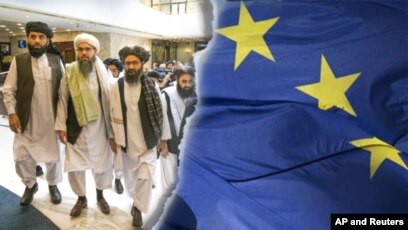
Last week, media outlets reported the visit of a 20-person delegation from about 20 European Union member states, including Belgium, Germany, Austria, and Sweden, to Afghanistan.
Fredi Roesmont, head of the Belgian Immigration Office and a member of the delegation, told the media that the main goal of the trip was to conduct technical assessments to verify the identities of Afghan migrants who, according to European immigration laws, are required to leave Europe.
In recent years, a number of Afghan nationals who committed crimes in European countries and were issued deportation orders have remained in Europe due to difficulties in verifying their identities and the lack of effective mechanisms for their transfer back to Afghanistan. This ongoing situation has placed significant pressure on European immigration agencies and become a persistent challenge in the EU’s migration policies.
At first glance, the European delegation’s visit to Kabul can be seen as an unavoidable measure based on practical necessities. Security and legal concerns of European governments regarding the presence of individuals with deportation orders are understandable. Without establishing at least a minimal technical liaison with Afghanistan’s ruling structures, facilitating the return of these migrants would seem practically impossible. However, reactions on social media, especially among Afghan civil society activists, indicate that a significant portion of public opinion in Afghanistan does not view this as merely a technical engagement but rather as a step toward the gradual recognition of the Taliban.
From the Taliban’s perspective, welcoming European delegations fits within a predictable strategic framework. The group generally engages in talks with foreign actors only when it sees the possibility of maintaining political control and gaining concessions. The Taliban use such interactions to strengthen their domestic and international legitimacy and therefore prefer short, frequent, staged negotiations. Delaying responses to technical requests can also be part of this strategy, aimed at prolonging contacts and increasing opportunities to extract political, economic, and security concessions.
This behavioral pattern of the Taliban is well known within Afghanistan, and many observers believe European countries are also aware of this tactic. Nevertheless, the continuation of negotiations and gradual concessions to the Taliban have led some experts to suspect that Europe, intentionally or unintentionally, might be moving toward an unofficial form of recognition of the group in the long term.
The transfer or practical acceptance of some Afghan political representations in Europe to diplomats appointed by the Taliban, a trend that has increased over the past year, is one example within this context. In recent months, the Afghan embassies in Berlin, the consulate in Bonn, and the embassy in Oslo have hosted diplomats approved by the Taliban, while some other Afghan diplomatic missions in cities such as Paris, London, Rome, Vienna, Brussels, and Stockholm have suspended their activities.
In this framework, official reports from the U.S. Special Inspector General for Afghanistan Reconstruction (SIGAR) and statements by the United Nations Assistance Mission in Afghanistan (UNAMA) have referred to regular financial payments to the governing structure in Kabul. Some analysts interpret these payments as part of the practical engagement between the international community and the Taliban.
However, any move toward formalizing the Taliban, even unofficially, faces serious obstacles within Western countries. The Taliban have been designated as a terrorist group under sanctions for years, and many of its leaders still face human rights allegations. Furthermore, the Taliban’s record over the past four and a half years, especially concerning women’s rights and ethnic and religious minorities, conflicts with fundamental principles and values of the European Union.
Therefore, continuing technical interactions without clearly defining the boundary between executive cooperation and political recognition may effectively lead to a form of unofficial legitimization of the Taliban. This process severely complicates maintaining a distinction between engagement and recognition and opens the door for domestic and international criticism. Even if European countries emphasize the purely humanitarian or technical nature of these interactions, the Taliban can leverage them to gain “limited legitimacy,” which many regional and international actors view as a step toward recognition with potentially unpredictable political consequences.
Ultimately, Europe, a leading supporter of international human rights conventions, faces a difficult choice: uphold its normative cohesion and adherence to declared principles or prioritize security and management concerns in its dealings with a sanctioned group. If these interactions proceed in a way that is interpreted as practical recognition of the Taliban, the risk of eroding public trust—both within Afghanistan and internationally—will rise. Such a process could intensify political pressures within Europe and even lead to new security challenges.
Seyed Mohammad Mousavi