2025: A Year of Entrenched Isolation and Intensified Pressure on Afghanistan
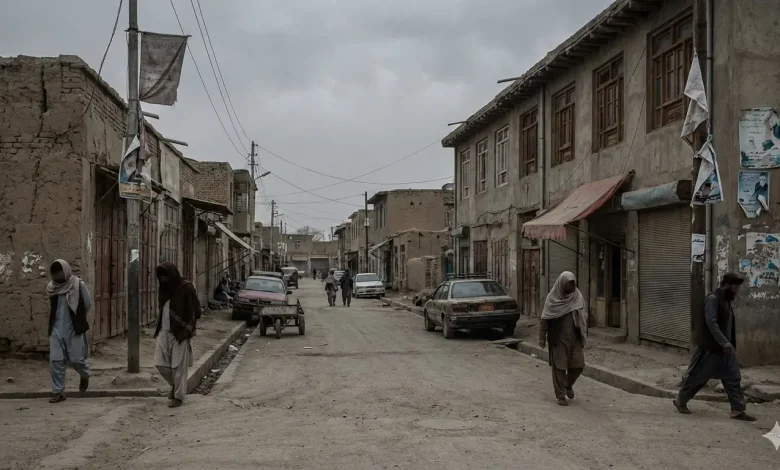
The year 2025 was not a year of ‘great transformation’ for Afghanistan; rather, it was a year of consolidating the situation that had formed following the Taliban’s return to power. The developments of this year were not marked by a sudden event but by a series of decisions, international pressures, regional changes, and chronic crises. Some of these changes occurred within Afghanistan and many more outside its borders, but all directly affected the country’s fate.
In 2025, Afghanistan more than ever resembled a forgotten issue on the global agenda—a country whose crisis continued but global attention on it had diminished.
Taliban in Their Fourth Year of Power: Consolidation Without Legitimacy
In 2025, the Taliban entered their fourth year of rule, a governance that remained lacking official international recognition. However, the Taliban managed to consolidate their administrative and security control and prevent a complete collapse of government structures.
Yet, this consolidation came at a heavy cost:
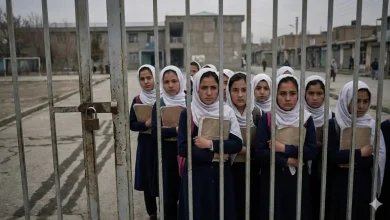
– Continued exclusion of women from education, employment, and public spaces
– Secondary schools and universities remained closed to girls
– Increased restrictions on media and civil society
– Complete concentration of power within the closed circle of Taliban leadership
In 2025, it became clear that the Taliban were unwilling to make ideological adjustments to gain global legitimacy, choosing instead to continue their rule with minimal interaction and maximum control.
Economy in a State of ‘Survival’: Neither Collapse nor Growth
Afghanistan’s economy in 2025 neither collapsed nor revived but remained in a state of ‘minimal survival.’
Key features of the economy during this year included:
– Heavy reliance on humanitarian aid
– Continued liquidity crisis and limited access to the global banking system
– Growth of the informal economy, smuggling, and cross-border trade
– Increased cultivation and trafficking of industrial narcotics despite Taliban claims of combating drugs
While some regional countries maintained limited trade with Afghanistan, sanctions and banking isolation deprived the economy of any real growth potential.
Humanitarian Crisis: Catastrophe Normalized
In 2025, Afghanistan continued to experience one of the world’s largest humanitarian crises, but what changed was the ‘level of global attention.’
– Millions remained in severe food insecurity
– Child malnutrition reached critical levels in many provinces
– International aid decreased or faced political restrictions
– Aid organizations faced increasing pressures from the Taliban
The humanitarian crisis in Afghanistan in 2025 was no longer ‘breaking news’ but had become a chronic, normalized condition.
Regional Developments: Afghanistan at the Margins of Power Games
Pakistan: Distancing and Tensions
Relations between the Taliban and Pakistan grew tenser in 2025. Escalating clashes in border areas, the issue of the Tehrik-i-Taliban Pakistan (TTP), and Islamabad’s growing frustration over its influence on the Taliban led the relationship to enter a cold and mistrustful phase.
Iran: Cautious Engagement
Iran continued a policy of controlled engagement with the Taliban, focusing on:
– Border management
– The Afghan refugee issue
– The Helmand River water rights
However, this engagement never reached the level of a political partnership.
China and Russia: Security Interests, Not Political Responsibility
In 2025, China and Russia continued limited security and economic interactions with the Taliban, focusing on:
– Preventing the spread of extremism
– Relative stability at their borders
– Limited economic interests
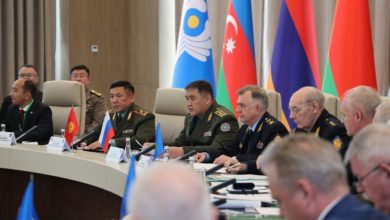
It is worth noting Russia’s unique position as the only country in the past year to officially recognize the Taliban government.
The World and Afghanistan: A Lost Priority
In 2025, global attention to Afghanistan was overshadowed by other crises:
– Major international wars and tensions
– Geopolitical rivalries among great powers
– Global economic crises
Afghanistan was no longer front-page news, but the consequences of neglect remained.
Afghan Society: Silence, Migration, and Eroding Hope
Perhaps the most significant development of 2025 was what was less visible:
– Increased emigration of elites
– Erosion of hope among the younger generation
– Gradual silencing of civil protests
– Forced societal adaptation to restrictions
Afghanistan in this year was defined more than anything by ‘silence’—a silence stemming not from consent but exhaustion.
Conclusion: 2025, the Year of Crisis Consolidation
The year 2025 was not a year of change for Afghanistan; it was a year of crisis consolidation. Neither a widespread war returned nor real peace was established. Neither did the government collapse nor did it gain legitimacy.
By the end of 2025, Afghanistan remained at a crossroads between survival and deadlock—a country whose future more than ever depended on decisions yet to be made.
Written by: Seyed Mostafa Mousavi