Trump Signs U.S. Defense Bill, Repeals Caesar Act Sanctions on Syria
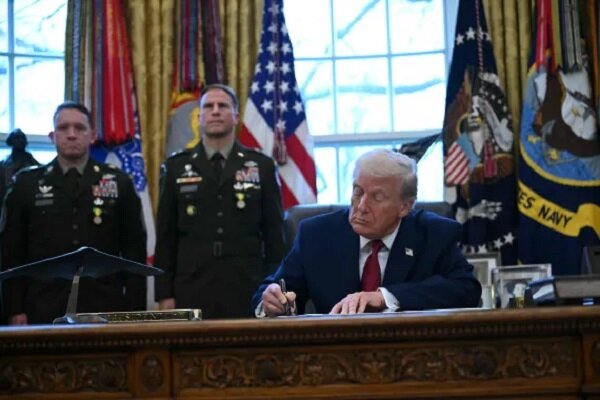
U.S. President Donald Trump has signed the National Defense Authorization Act (NDAA), which approves the largest annual budget for the Department of Defense—exceeding $900 billion—and includes the repeal of the Caesar Act sanctions on Syria.
According to reports, the legislation was signed behind closed doors after being approved by the U.S. Congress, contradicting earlier statements suggesting a public signing ceremony.
The NDAA outlines U.S. defense priorities and mandates the White House to submit regular reports to Congress over the next four years. These reports must assess whether the Syrian government is actively combating terrorism and drug trafficking, supporting minority groups, and working toward peace with neighboring countries.
The new law also stipulates conditional sanctions on Syria. If two consecutive reports deliver negative assessments of the Syrian government’s performance, the U.S. president is required to impose specific sanctions on Damascus.
The U.S. Senate had previously approved the Pentagon’s budget for 2026, which includes the repeal of sanctions imposed under the Caesar Act. A week earlier, the House of Representatives had also voted in favor of repealing the law.
The Syrian government has welcomed the repeal of the Caesar Act, describing it as a step toward rebuilding the country’s economy. Experts believe lifting these sanctions could pave the way for renewed investment and foreign aid, strengthening the new Syrian administration led by Ahmad Al-Sharaa.
The Caesar Act, enacted in December 2019, imposed sweeping sanctions on individuals, companies, and institutions affiliated with Syria’s former regime. Over the years, it has been a major obstacle to economic recovery in the country.