Afghanistan Remains the Only Country Banning Girls’ Education Three Years After Taliban Takeover
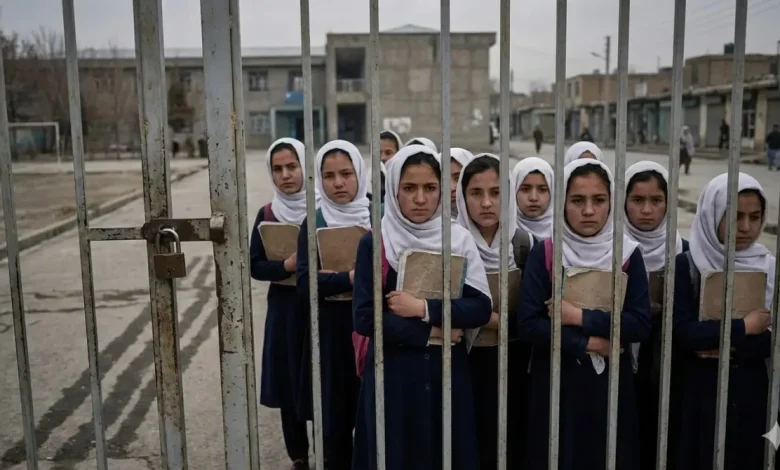
Uncertain Future for Afghan Girls’ Education: A Generation Left Behind
More than three years have passed since Afghanistan imposed sweeping education restrictions on girls. These limitations began on March 23, 2022, when secondary schools were indefinitely closed to girls—a policy later extended in December that year to a ban on women attending university. As a result, millions of Afghan girls are losing access to an education that the international community considers a fundamental human right. So, what are the consequences of this ban? What does the global community say? And what lies ahead for this generation?
Three Years After School Closures: Afghanistan, the World’s Only Nation with an Official Ban on Girls’ Education
Following the Taliban’s return to power in August 2021, the group initially pledged to reopen girls’ schools after “an appropriate Islamic framework” was established. However, on March 23, 2022—when secondary schools were scheduled to reopen—the Taliban abruptly reversed course, ordering them to remain closed.
According to a 2023 report by UNESCO, around 1.1 million girls have been denied access to secondary education.
On December 20, 2022, the Taliban’s Ministry of Higher Education officially banned women from attending universities “until further notice.”
These decisions have made Afghanistan the only country in the world with a comprehensive ban on female education.
Social and Economic Consequences: From Poverty Cycles to a Shrinking Workforce
Countries that have restricted female education in the past suffered long-term repercussions. International bodies have repeatedly warned that banning girls’ education in Afghanistan could lead to:
2.1 Intergenerational Poverty and Dependency
According to the World Bank’s 2023 report, even before the government collapsed, Afghan women’s economic participation stood at just 16%. With girls now barred from education, this figure is likely to drop even further. A society that deprives half its population of education sacrifices its ability to break free from entrenched poverty.
2.2 Future Shortage of Skilled Workers
Female doctors, teachers, nurses, and other professionals have played a critical role in Afghanistan’s public services. As the current generation retires or emigrates, the lack of a new generation of educated women could lead to a crisis in skilled labor.
2.3 Psychological and Social Toll
UNICEF’s 2022 report highlighted rising incidents of depression, social isolation, and forced marriages stemming from educational deprivation. Families that see no future for their daughters in education are increasingly pushing them into early marriage.
Desperate but Determined: From Secret Classes to Online Learning
Despite the restrictions, efforts to continue education persist.
3.1 Secret Home Classes
Across cities like Kabul, Herat, Mazar, and Balkh, male and female teachers are running private and semi-underground classes. Many of these sessions operate without formal support and under constant threat of shutdown or arrest.
3.2 Online Learning: A Difficult But Growing Option
Despite challenges like poor internet and costly data, online platforms such as video courses, Google Meet, and international education networks have become precious lifelines. But limited access to smartphones and laptops remains a significant barrier.
3.3 Role of International Organisations
In 2023, UNESCO launched a support program for girls deprived of formal education. This includes:
– Basic education kits
– Vocational training courses
– Support for online learning initiatives
However, experts caution that such measures cannot fully replace structured, long-term schooling.
Taliban’s Position: Delay, Reform, or Permanent Ban?
Over the past three years, Taliban officials have voiced inconsistent positions:
Spokesman Zabihullah Mujahid has repeatedly claimed the restrictions are “temporary” and will last until a “proper religious and cultural environment” is created.
In 2023, Sheikh Habib-ur-Rahman Haqqani, head of the Taliban’s Education Council, announced the need to “reform the curriculum” to align with “Islamic values.”
Meanwhile, some local commanders have openly stated that girls’ education is “inadvisable.”
These differing views suggest the Taliban has no unified stance on the future of girls’ education, complicating any long-term planning.
International Response: Condemnation Without Leverage
International entities— including the United Nations, European Union, Organisation of Islamic Cooperation (OIC), and numerous national governments— have demanded the immediate reversal of the education bans.
In 2023, UN Secretary-General António Guterres called the Taliban’s actions an “unprecedented violation of women’s rights in the 21st century.”
Despite fervent appeals, the international community has so far failed to secure any enforceable agreement or leverage to compel policy change.
Regional powers, while critical in rhetoric, have taken a more cautious stance due to security and economic considerations.
Looking Forward: Is There Hope for Reopening?
Despite widespread despair, there are some signs of potential change:
6.1 Domestic Pressure
Inside Afghanistan, many clerics, civil activists, businessowners, and even some Taliban members argue that school closures are a “strategic loss” for the country. In 2022 and 2023, several open letters from religious scholars across various provinces urged for the reopening of girls’ schools.
6.2 International Pressure
As Afghanistan relies heavily on humanitarian aid and seeks economic engagement, it faces growing pressure to respond to the international community. Countries like Qatar, Uzbekistan, and Indonesia have adopted mediation roles in discussions about women’s rights.
6.3 Likely Scenarios
International analysts suggest three probable scenarios:
– A limited, monitored reopening— such as girls-only schools with strict restrictions.
– A phased and conditional reopening— possibly involving curriculum reforms and full gender segregation.
– Continuation of the status quo— if internal division persists and no substantial external pressure materializes.
Currently, the second scenario appears the most likely.
Conclusion: A Generation Held Hostage by Policy
The ban on girls’ education in Afghanistan not only denies millions of children a basic right but also endangers the nation’s economic, social, and political future. Education is a cornerstone of development, and a country that deprives half its population of this pillar sets itself on a path toward prolonged stagnation.
The fate of Afghan girls’ education is also a test for the global community—one that must decide whether to remain passive observers to the 21st century’s most extreme educational crisis, or intervene to promote change.
✍🏻 Seyed Mostafa Mousavi