Three Afghan Opposition Blocs Unite to Push for UN-Backed Talks Amid Taliban Crisis
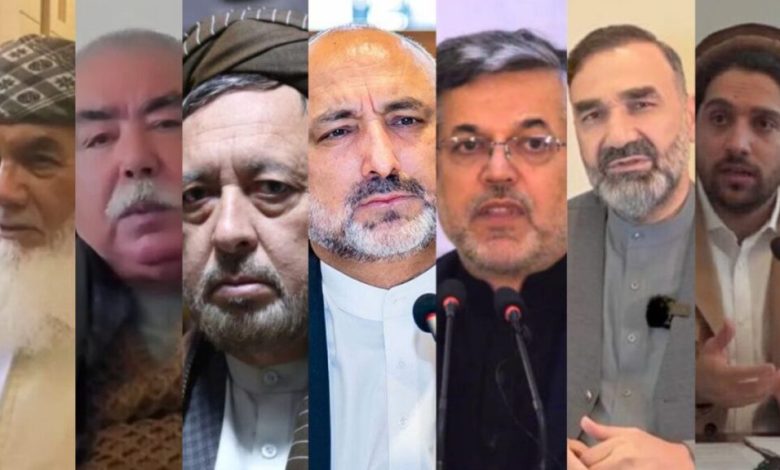
Three major Afghan political groups opposed to Taliban rule have announced a new alliance aimed at launching intra-Afghan dialogue with mediation and guarantees from the United Nations Security Council and regional countries. The coalition, formed by the National Resistance Council for the Salvation of Afghanistan, the National Assembly for Salvation, and the National Movement for Peace and Justice, stated that their main objective is to resolve the country’s ongoing crisis.
In a virtual meeting on Tuesday, prominent political figures including Ahmad Massoud, Atta Mohammad Noor, Yunus Qanuni, Hanif Atmar, Mohammad Mohaqiq, and Abdul Rashid Dostum emphasized the urgent need for national consensus and inclusive negotiations. They underscored that any future political agreement must guarantee the participation of women and youth in decision-making processes.
In a joint declaration, the three groups proposed drafting a new constitution, enabling national and local elections, and restoring stability through dialogue. Abdul Rashid Dostum, leader of the National Islamic Movement of Afghanistan, said he was “hopeful for the salvation of Afghanistan,” and emphasized inclusive, national dialogue as the key to ending the crisis.
According to these groups, resolving the political impasse requires negotiations guaranteed by the UN Security Council, regional powers, and the international community. They argued that any future political agreement must be backed by a clear roadmap and international guarantees to prevent another deadlock like the current one.
The statement stressed the need for meaningful participation of women and youth in the country’s future governance. It also warned of Afghanistan becoming a battleground, rising discrimination, human rights violations, and forced displacement. The signatories urged the Taliban to lift restrictions on education and employment for women, release former military personnel, halt land seizures, and end non-transparent mining contracts.
The opposition groups also called on the international community to increase humanitarian assistance and immediately remove restrictions on female staff in aid organizations. They insisted on transparency in managing national revenues and asked countries that have cut humanitarian aid to resume support under the supervision of an impartial committee.
Political leaders warned that if the Taliban fail to engage in inclusive negotiations and the crisis is not resolved through political means, serious political consequences will follow. This latest stance signals growing efforts by opposition forces to steer Afghanistan back toward national consensus and citizen-led governance.