Afghanistan and Pakistan Hold Talks in Saudi Arabia as Fragile Ceasefire Holds

A year of heightened tensions between Taliban-ruled Afghanistan and Pakistan has led to a new round of talks in Saudi Arabia. Although the discussions failed to yield any major breakthroughs, they did result in a key outcome: reaffirming the continuation of a fragile ceasefire along the border.
At the negotiation table in Riyadh, familiar accusations resurfaced. Islamabad continues to accuse Kabul of harboring militant groups like Tehrik-i-Taliban Pakistan (TTP), an allegation the Taliban reject, arguing that they are not responsible for Pakistan’s internal security.
Meanwhile, thousands of Afghan families who had fled to Pakistan during past conflicts are now facing a wave of arrests and deportations. The United Nations has warned that millions of Afghans could be forcibly returned to a homeland grappling with a humanitarian crisis and widespread human rights violations.
—
New Diplomatic Push in Saudi Arabia
The latest round of Afghanistan-Pakistan peace talks took place last weekend in Saudi Arabia. Military, security, and diplomatic representatives from Pakistan met behind closed doors with Taliban officials. The negotiations are part of a broader diplomatic effort that has previously included rounds in Doha and Istanbul.
After deadly border clashes in October 2025 that left dozens dead—the worst violence since the Taliban’s return to power in 2021—Qatar and Turkey brokered an immediate ceasefire in Doha. Despite this, follow-up talks in Istanbul failed to secure a lasting peace agreement, with both sides only agreeing to maintain the ceasefire temporarily.
Now, with Riyadh stepping in to host a fresh round, Saudi Arabia has joined the list of mediators. Still, this latest session ended without a comprehensive accord. Officials from both countries told Reuters that only the continuation of the ceasefire had been agreed upon.
—
Roots of the Dispute: Border Clashes and the TTP
To understand the stakes, one must look back at the troubled, mountainous border zone marked by years of proxy wars, suicide bombings, and airstrikes.
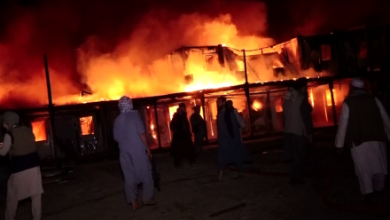
In the October 2025 border clashes, Pakistani forces said they responded to attacks originating from Afghan territory by targeting Taliban positions and militant training camps, even briefly occupying some Taliban-controlled areas. The Taliban rejected this account and called the strikes a violation of Afghan sovereignty.
At the center of these tensions is the TTP, which has waged an insurgency against the Pakistani state since 2007. According to Pakistani research sources, over 2,000 people were killed by armed attacks in the first quarter of 2025 alone, making it one of the bloodiest years in a decade.
Pakistan claims the TTP’s leadership and fighters are operating from within Afghanistan. The Taliban deny this, asserting that Afghan territory won’t be used to launch attacks on other nations.
However, the Taliban also warn that pushing them too hard to combat the TTP could fracture their ranks and prompt defections to more extremist groups like Islamic State Khorasan Province (ISIS-K), a concern shared by some regional security analysts.
—
Three Rounds of Diplomacy: Doha, Istanbul, Riyadh
The recent diplomatic roadmap includes key talks in three cities.
– Doha: The start of the ceasefire – In October 2025, amid ongoing border clashes, Qatar and Turkey brokered talks between Pakistan’s defense minister and Taliban defense chief Mullah Yaqoob that resulted in an initial ceasefire. The move was praised by Saudi Arabia, Qatar, and Turkey as a step toward regional stability.
– Istanbul: Talks collapse – After the Doha ceasefire, discussions moved to Istanbul but collapsed without a deal, according to Pakistan’s defense minister. The Taliban, however, pledged to uphold the ceasefire as long as no attacks originated from Afghan soil.
– Riyadh: New initiative, old deadlock – The Saudi-hosted talks showed little progress. Pakistan demanded written commitments from Kabul against anti-Pakistani groups, while the Taliban reiterated that securing Pakistan’s internal safety is beyond their remit. The outcome: a continued ceasefire but no roadmap for enduring peace.
In essence, the current ceasefire is held together more by regional pressures and a shared fear of broader conflict than by any structural agreement—neither Islamabad nor the internationally isolated Kabul can afford an all-out war.
—
Afghan Refugees: Caught in the Crossfire
While officials debate behind closed doors in lavish hotels, ordinary people—especially Afghan refugees in Pakistan—bear the brunt of the ongoing crisis.
Since 2023, Pakistan has implemented a campaign to repatriate undocumented foreigners, focusing heavily on Afghans. According to IOM and media reports, tens of thousands of Afghans have been forced or pressured to return in the first months of 2025 alone.
UNHCR reports that by April 1, 2025, approximately 1.17 million Afghans had returned from Pakistan—tens of thousands by force, others with aid. Yet the UN warns many returnees, especially women and girls, face severe risks of human rights abuses in Afghanistan.
UN human rights experts stated on August 29, 2025, that Pakistan’s return plan could affect millions of Afghans, including those with registered refugee status (PoR cards). They stressed that the principle of non-refoulement—not returning people to places where their lives or freedoms are at risk—is a non-derogable standard in international law.
Reports from human rights organizations offer stark testimony. Amnesty International’s “Treat Us Like Human Beings” campaign found that between September 2023 and February 2025, at least 844,000 Afghans were forced to return. Many had lived in Pakistan for decades, built businesses, and educated their daughters—who now face a return to a country where girls’ education beyond sixth grade is banned.
In every escalation between Kabul and Islamabad, Afghan refugees become a bargaining chip—excluded from negotiations and voiceless in official statements.
—
Regional Powers: More than a Bilateral Dispute
Today, the Afghanistan–Pakistan crisis has grown beyond a bilateral issue into a broader arena involving numerous regional and global actors.
– India’s new role – As Pakistan–Taliban tensions rise, India is charting a different path. In 2025, New Delhi stepped up engagement with the Taliban, upgraded its diplomatic mission in Kabul, and hosted senior Taliban officials. Analysts say this warming relationship heightens Pakistan’s concerns, with Islamabad accusing Kabul of becoming an Indian proxy—a charge both Kabul and New Delhi deny.
– Qatar and Turkey: Consistent mediators – These two nations have played an active mediating role, from facilitating the Doha ceasefire to organizing the unsuccessful Istanbul talks. Qatar hosts the Taliban political office, making it a natural mediator, while Istanbul serves as a Western gateway and a discussion platform for NATO stakeholders.
– Saudi Arabia: Late but significant – In recent months, Riyadh has signaled a desire to play a bigger role in the Afghan file. Its foreign ministry praised the Afghanistan–Pakistan ceasefire as a “vital step” and lauded Qatar and Turkey’s efforts.
These overlapping interests have turned the Afghanistan–Pakistan border into not just a geographical divide but a geopolitical fault line, linking rivalries between powers including Iran, China, India, Turkey, Qatar, and Saudi Arabia.
—
What Lies Ahead: Scenarios for the Future
A few plausible scenarios emerge from the current circumstances:
1. Maintaining a fragile ceasefire without structural peace – The current state reflects this: a ceasefire persists but no lasting political framework exists. Lacking a unified stance on groups like TTP, any sudden attack could shatter the truce. Still, both sides seem reluctant to escalate fully—Pakistan faces economic crises and regional tensions, while the Taliban struggle with legitimacy, sanctions, and internal unrest.
2. Escalated low-intensity violence – A more pessimistic path sees periodic flare-ups continuing. Several recent deadly attacks on Pakistani forces, blamed on the TTP, hint at this possibility. Pakistan may carry out more cross-border strikes, prompting Taliban retaliation—fueling a tit-for-tat cycle that weakens but doesn’t break the ceasefire completely.
3. Redefined relations under regional pressure – The optimistic scenario envisions sustained international mediation leading to a long-term political agreement. The Taliban would take clearer action against militants, and Pakistan might ease deportations and support for Kabul. Such a shift would require a rethinking by both parties—unlikely in the short term, but potentially the only path out of the current stalemate.
—
Conclusion: Beyond the Border
While the Saudi talks may appear as just another round of stalled diplomacy, affirming the shaky ceasefire holds profound implications for those living on both sides of the border.
Unless Kabul and Islamabad agree on clear definitions of security, borders, and militant roles, future ceasefires will remain fragile and temporary. Each new conflict could unleash fresh waves of displacement and insecurity, forcing Afghan families—many who have made lives in Karachi, Quetta, and Peshawar—to return to a homeland that exists more on paper than in reality.
Ultimately, peace between Afghanistan and Pakistan will not materialize from security accords alone—it will depend on whether these nations and their allies listen to those whose names never make it into the press releases: refugees, border residents, and the women and girls seeking basic safety between two realms of mistrust.
If the negotiations in Doha, Istanbul, and Riyadh are to produce lasting results, they must forge a peace that secures not just borders but everyday lives. Otherwise, today’s ceasefire will remain just a temporary pause in a long cycle of violence.
—
Written by: Seyed Mostafa Mousavi