Afghanistan’s Underground Music Scene Defies Taliban Ban
Since the Taliban regained control of Afghanistan in August 2021, the country’s cultural life has come under severe restrictions. One of the earliest and most extreme bans imposed has been on music. The sound of instruments has faded from streets and concert halls, but music itself has not vanished.
In hidden corners of cities—in basements, small rooms, and secluded apartments—a new generation of musicians and composers continues to play. With every note, they resist the silence imposed on Afghanistan’s cultural landscape.
Taliban’s Official Policy: Systematic Suppression of Music
Since their return, the Taliban’s Ministry for the Promotion of Virtue and Prevention of Vice has adopted a hardline stance against music. Media managers have been repeatedly summoned and threatened to halt the broadcast of any “inappropriate music or sound” deemed incompatible with “Islamic principles and Afghan culture.”
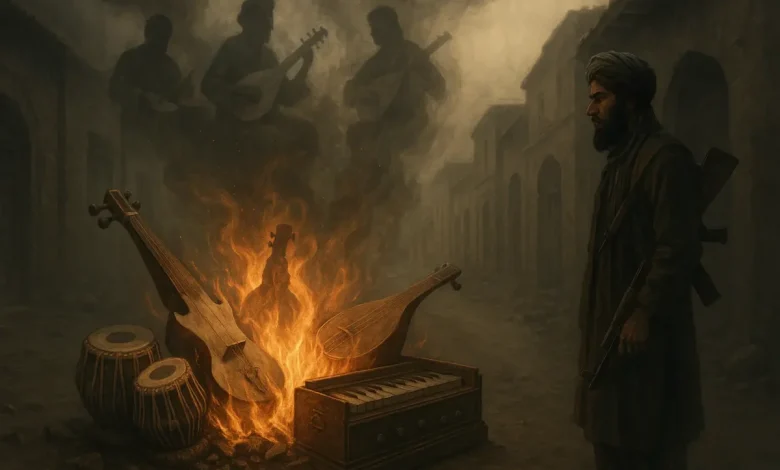
According to numerous reports, one of the most widespread Taliban efforts has been the destruction of musical instruments. Taliban authorities in several provinces have announced that over 21,000 instruments—including guitars, rubabs, harmoniums, drums, and sound systems—were destroyed within a certain period. In Herat, widely circulated images showed a mountain of collected instruments engulfed in flames—now symbolic of cultural repression.
Sheikh Azizur Rahman Mohajer, a senior official from the Taliban’s ministry in Herat, called the act a “religious duty,” stating: “Music leads youth to corruption, and eliminating it is a moral and religious necessity.”
Global Reaction: A ‘Musical Genocide’
International responses to the music ban have been strong. The International Music Council (IMC) has labeled the Taliban’s policy as “musical genocide,” stressing that the group is carrying out a “systematic erasure of a key part of Afghanistan’s cultural identity.”
Ahmad Sarmast, founder of the Afghanistan National Institute of Music (ANIM), now living in exile, told reporters: “Burning instruments is just one example of cultural slaughter. Afghans have been deprived of artistic freedom, and the destruction of instruments reflects the Taliban’s intent to erase our cultural memory.”
Human rights organizations reaffirm that the music crackdown goes beyond the ban and destruction of instruments. In some regions, musicians have faced harassment, assault, arrest, and even torture. Some artists have been forced to bury or hide their instruments, fearing Taliban raids on homes.
The Underground Generation: Resistance in Secrecy
Despite the blanket ban, music survives underground in Afghanistan. Many young musicians—trained before the Taliban’s return—now play and record discreetly in locked apartments, windowless rooms, or secret home studios. They:
– Hide their instruments
– Conceal recording equipment
– Perform only in small, trusted gatherings
For many, exile has been the only way to continue their art. Dozens of musicians, students, and members of the ANIM orchestra were relocated to Portugal after Kabul’s collapse. They now perform as the “Afghanistan National Youth Orchestra in Exile,” working to preserve the country’s musical heritage.
At the same time, young Afghan composers in exile collaborate with international artists on joint projects, using the relative safety of digital platforms to share their sound with the world.
Technology: The Last Bastion of Musical Continuity
Amid the Taliban’s threats, digital technology has become a crucial tool for preserving music in Afghanistan. Musicians use laptops, smartphones, and audio production software to record their work and anonymously publish it on social media and music platforms. While risky, this approach has enabled a fragile continuity.
International organizations, cultural institutions, and human rights bodies have also stepped in to offer support. Some Afghan artists abroad now have access to studios and educational centers, with dedicated programs established to release their work.
Clash of Forces: Power, Identity, and a New Generation
The suppression of music exposes a deep clash between three core forces shaping today’s Afghanistan:
1. The Taliban’s political power and ideological control
2. The deep cultural and historical roots of Afghan music
3. A young, educated generation of musicians
Music has long been part of Afghanistan’s social identity—ranging from classical and traditional styles to folk and modern pop. But the new generation, educated over the past two decades, now fights to keep it alive—either underground or in exile. Their performances represent more than art; they stand as symbolic acts of resistance.
This generation isn’t just preserving music. They are defending a cultural future that breathes and imagines. At the height of repression, they carry a message of hope: music may be banned, but it cannot be erased from the hearts of the people.
Looking Forward: Hidden Hope Amid Darkness
The future of music in Afghanistan remains uncertain. Public performances, concerts, formal education, and free distribution of artistic works have become nearly impossible. Yet cultural resistance—both inside the country and in exile—is quietly laying the foundations for music’s survival.
Key questions remain:
– Will music ever return to Afghan stages?
– Will the underground generation have a chance to reemerge publicly?
– Will Afghan voices continue to be heard only in exile and online?
One thing is clear: music is still alive—quieter than before, but as Afghan musicians say, “As long as even one person plays an instrument, our identity lives on.”
✍🏻 By Seyed Mostafa Mousavi