Why I Feel a Stronger Responsibility to Safeguard the Name ‘Persian Language’
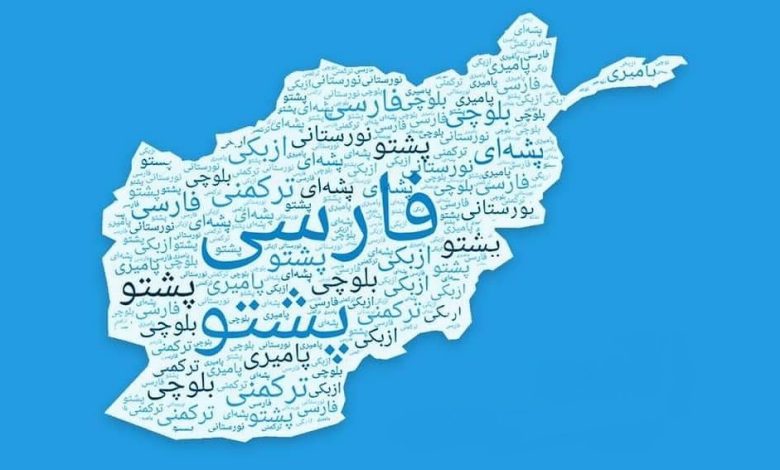
As a child growing up among my Pashto-speaking peers in Kandahar, I was known as Mohammad Nabi Farsiwān—a nickname that I found quite pleasant. My full name is Mohammad Nabi, though on social media, I’m known simply as Mohammad. ‘Farsiwān’ is a variant of the term ‘Persian speaker.’ In Kandahar, Shiites are commonly referred to as Farsi-speaking or Farsiwān.
Some years ago, I wrote an article explaining that the Farsi-speaking population of Kandahar consists of Sayyids, Qizilbash, Tajiks, Hazaras, Baloch, and a number of other social groups. Their shared Shiite faith, Persian language, and customs have formed the basis for their unity as an ethnic and social group.
Nearly two centuries ago, ‘Munshi Abdul Karim Alavi,’ a member of the scribal class in the Indian subcontinent, mentioned two social groups in Kandahar—the ‘Farsiwān ethnic group’ and the ‘Afghan ethnic group’—in his book ‘The War of Kabul and Kandahar.’ Starting on page 14, he describes the religious, social, political, and economic condition of the Farsi speakers in Kandahar. This book, printed in India in 1850 (1267 AH), presents Farsiwān as an established ethnic group historically recognized by this name.
To this day, Kandahar’s Persian speakers are known by the names Farsiwān and Persian-speaking. Beyond merely speaking the Persian language, over the centuries, Persian has evolved into a core component of their ethnic and social identity. In other words, for Kandahar’s Farsi speakers, the language is not just linguistic—it is a defining characteristic.
It is for this reason that any attempt to change or rename ‘Persian language’ to something like ‘Dari’ lacks scientific, historical, or sociological backing and is a political maneuver. Such changes also impact the ethnic and social identity of a large population in Kandahar.
As a member of the Persian-speaking community in Kandahar, Persian is not only my mother tongue—it is part of my personal and collective identity. Therefore, I feel a heightened responsibility to preserve and protect it. This answers the question posed in the title of this article. In truth, Persian and I are like a noun and its modifier, or a subject and its adjective—intertwined since childhood. Any separation or change would distort my social identity.
The same principle applies to the Pashto language. Historical sources indicate that ‘Roh’ is another name for the Pashto language. Now imagine someone, for any reason, attempted to rename Pashto as Roh. Can such a change be considered scientific or sociological? The answer is no. Pashto is a well-established and deeply rooted language among its speakers, and changing its name without sound justification is baseless.
Ultimately, I am not alone in this conviction. Anyone who cherishes their mother tongue and ethnic identity feels a responsibility to protect them. However, this sense of responsibility should never lead to arrogance, discrimination, or denial of other languages and ethnic groups. Preserving one’s linguistic and cultural identity is commendable, as long as it does not become a basis for prejudice or exclusion of others.
✍️ Mohammad Moradi